Introduction
Most homeowners already know which tree worries them.
Not publicly maybe. They are usually not standing in the driveway talking dramatically about it every afternoon. But once strong wind starts moving through Central Illinois, their attention keeps drifting toward the exact same tree almost automatically.
Usually it is the one hanging too close above the garage.
Or the giant limb stretching over the roof everybody keeps talking about trimming “sometime soon.”
The strange thing is how long people can live with that feeling before finally calling somebody.
Around Peoria, Chillicothe, Washington, Bloomington, and nearby communities, homeowners often spend years quietly hoping the tree simply survives one more storm season without forcing a bigger decision. The leaves still come back. The trunk still stands. Nothing catastrophic happened yet.
So the tree stays.
At Leveled Up Tree & Crane, those conversations happen constantly during inspections. Homeowners walk outside, stare up at the same tree they have distrusted for a long time already, and usually say something close to:
“Yeah… we’ve honestly been worried about that thing for a while.”
Dangerous Trees Rarely Become “Dangerous” All At Once
That is probably why people wait so long.
Most hazardous trees change gradually enough that homeowners adapt to the changes without fully realizing it. A branch falls during one storm but misses the driveway. Part of the canopy thins out over a few years. The tree leans slightly more after heavy rain, but not enough to completely panic anybody yet.
Life keeps moving.
Kids still run through the yard. Cars still park beneath the branches. People mow around the roots every week without stopping to think too hard about whether the tree looks different than it did five years ago.
Then eventually another storm rolls through Central Illinois and suddenly the entire situation feels heavier emotionally.
Wind sounds louder.
Branches look bigger.
Homeowners check outside repeatedly before bed because they already know exactly which tree they are worried about before the weather even arrives.
That shift usually happens long before the emergency itself.
Most People Are Not Trying To Ignore The Problem
Honestly, they are usually trying not to overreact.
Nobody wants to remove a mature tree unnecessarily. Homeowners worry about making the wrong call. Some worry about cost. Others worry about property damage during removal. A lot of people simply do not know who to trust once the tree starts feeling genuinely dangerous.
That uncertainty causes delays constantly.
Especially after hearing stories from neighbors about contractors:
- disappearing halfway through jobs
- leaving debris everywhere
- damaging lawns
- refusing difficult removals
- giving confusing pricing
People become cautious after hearing enough of those stories.
At Leveled Up Tree & Crane, many customers already contacted another company before calling. Sometimes they were told the removal looked “too risky.” Other times nobody wanted to touch the tree because access was difficult or the project required specialized equipment.
That leaves homeowners stuck in this weird situation where the danger still exists but nobody seems willing to help solve it.
That frustration builds quickly.
Storms Change The Emotional Weight Of Trees Fast
Especially overnight storms.
A tree homeowners barely noticed all summer can suddenly become the only thing anybody thinks about once strong wind starts rattling windows at 2 a.m. People start mentally calculating exactly where the trunk would land if the roots gave out completely.
That image stays in the back of the mind afterward too.
Homeowners begin parking differently during storms. Families avoid parts of the yard. Some people even admit they sleep worse once they stop trusting a large tree near the house.
That low-level stress quietly follows people through every severe weather alert after that.
Especially around older neighborhoods where massive trees sit close to homes built decades ago.
Emergency Tree Calls Usually Start With “We Were Already Talking About It”
This happens constantly.
The tree that finally crashes during the storm is often the exact same tree homeowners already discussed removing six months earlier. Maybe a branch already came down the previous winter. Maybe the trunk started leaning more noticeably after heavy rain.
Usually there were warning signs somewhere along the way.
At Leveled Up Tree & Crane, emergency calls throughout the Peoria area often involve homeowners sounding frustrated with themselves afterward because deep down they already knew the tree had become stressful long before the weather forced the issue completely.
That does not make people irresponsible.
It makes them human.
Most people hope problems stay manageable longer than they actually do.
Trees Near Homes Feel Completely Different Emotionally
A questionable tree in an open field feels manageable.
A questionable tree hanging above:
- bedrooms
- garages
- driveways
- power lines
- businesses
- neighboring property
feels completely different once storms move through Illinois.
That is where specialized crane work starts mattering.
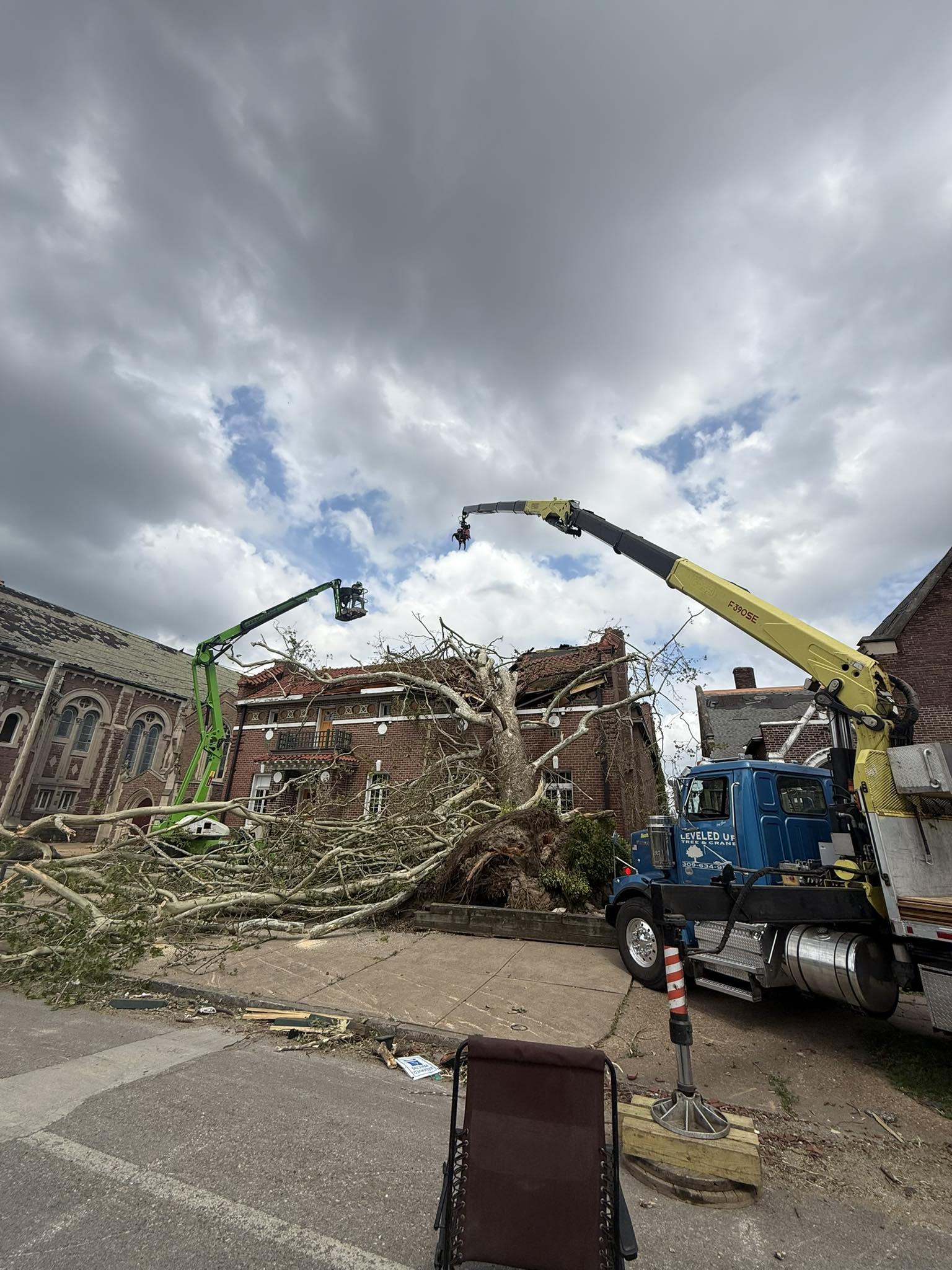
At Leveled Up Tree & Crane, grapple saw crane services help crews safely remove dangerous trees in situations where traditional removal methods become much riskier for surrounding property. Homeowners usually feel noticeably calmer once they realize the crew has equipment specifically designed for hazardous removals instead of simply improvising around danger.
That peace of mind matters more than people expect.
Especially once the tree already caused stress for months or years beforehand.
Some Homeowners Worry More About The Cleanup Than The Removal
This comes up surprisingly often.
People imagine giant ruts through the yard. Broken landscaping. Wood debris sitting near the driveway for weeks afterward. Once somebody hears one contractor horror story from a neighbor, it sticks in their head every time they think about scheduling tree work themselves.
That hesitation makes sense honestly.
At Leveled Up Tree & Crane, cleanup and property protection matter because homeowners are trusting crews around their entire property during situations that already feel stressful enough.
Nobody wants the removal process itself becoming another problem afterward.
Especially during emergency situations where homeowners already feel overwhelmed from storm damage.
Insurance Situations Add Another Layer Of Stress Fast
Especially once trees hit structures.
Most homeowners have no idea how insurance documentation works until they suddenly need it during an emergency. Now they are juggling:
- roof damage
- cleanup stress
- scheduling
- insurance calls
- photographs
- estimates
- temporary repairs
all while trying to process the situation emotionally at the same time.
That becomes exhausting quickly.
Leveled Up Tree & Crane helps customers navigate insurance situations from start to finish because severe storm damage already carries enough pressure without homeowners trying to decode insurance paperwork completely alone too.
Sometimes people mostly need somebody calm explaining what happens next.
A Lot Of Dangerous Trees Still Look “Healthy” To Homeowners
That part surprises people constantly.
Trees can still produce leaves every spring while carrying serious structural weaknesses internally. Homeowners often assume green leaves automatically mean the tree is healthy overall.
Unfortunately that is not always true.
Storm stress, root instability, internal decay, heavy leaning, repeated branch loss, and hidden structural damage can exist long before the tree actually fails completely.
That is why inspections matter.
Sometimes trimming solves the issue. Sometimes removal becomes the safer option before another storm season arrives. Either way, homeowners usually feel better once they stop guessing and finally understand what they are actually dealing with.
Customers Usually Just Want Somebody Honest
Not sales pressure.
Most homeowners calling about dangerous trees already feel stressed enough. They do not want dramatic scare tactics or confusing technical language. They mostly want somebody experienced to explain:
- what looks dangerous
- what can probably wait
- what the safest approach looks like
- whether the job requires crane work
- what cleanup will involve
That clarity lowers anxiety fast.
At Leveled Up Tree & Crane, the approach stays straightforward because homeowners are already dealing with enough mentally once hazardous trees enter the conversation.
Frequently Asked Questions
Do you really take jobs other tree companies refuse?
Yeah, pretty often honestly.
Usually it’s because the tree sits in a rough spot or the removal makes people nervous. Maybe it’s hanging over a roof. Maybe power lines are involved. Sometimes access is terrible and homeowners already heard “we can’t do it” from somebody else before calling.
That’s actually one of the reasons people end up reaching out to Leveled Up Tree & Crane in the first place.
The company handles difficult removals throughout Central Illinois using specialized equipment like grapple saw cranes specifically because some jobs need more than a pickup truck and a chainsaw.
Are you actually available during emergencies?
Yes.
Storm situations don’t exactly wait for business hours, especially around Peoria and the surrounding areas once weather gets rough. A lot of emergency calls happen late at night, early morning, weekends, holidays, all of it.
Most homeowners calling during storm damage situations are already overwhelmed enough before they even pick up the phone. Usually they just want somebody dependable to answer and help them figure out what happens next.
That part matters more than people think.
What areas do you cover?
The company is based in Chillicothe, but Leveled Up Tree & Crane works throughout Central Illinois including:
- Peoria
- Bloomington
- Galesburg
- Washington
- Canton
- surrounding communities across the region
Some customers are surprised how far the service area actually stretches once they start talking through the project.
What exactly is a grapple saw crane?
Honestly, most homeowners don’t know until they see one working in person.
The easiest way to explain it is that the crane allows crews to safely remove dangerous sections of trees with much more control, especially near homes, garages, businesses, or tight areas where traditional cutting methods become risky fast.
For hazardous removals, that precision changes everything.
It also tends to calm homeowners down once they realize the crew isn’t just “hoping for the best” while cutting apart a massive tree above the property.
Do you help people with insurance situations too?
Yes, and a lot of homeowners end up needing more help with that part than they expected.
Storm damage creates this weird situation where people suddenly have:
- cleanup stress
- roof concerns
- tree debris
- scheduling problems
- insurance paperwork
all happening at the same time.
Leveled Up Tree & Crane helps customers document damage and work through the insurance side of things because most homeowners have never dealt with major tree damage claims before.
Trying to figure all of that out alone while staring at a tree on your roof is not exactly a great day.
Conclusion
Most dangerous trees do not become emergencies overnight.
Usually homeowners have been quietly watching the same tree for a long time already. Maybe after storms. Maybe during windy nights. Maybe every winter once snow starts building up on heavy limbs again.
People keep hoping the tree survives one more season because life gets busy and the problem never feels urgent enough right up until weather suddenly changes that.
That pattern happens constantly around Central Illinois.
Leveled Up Tree & Crane helps homeowners throughout Peoria, Chillicothe, Bloomington, Washington, Canton, and surrounding communities handle hazardous removals, emergency storm cleanup, difficult crane-assisted projects, and insurance situations with dependable service and straightforward support from start to finish.
Most importantly, homeowners are not treated like they have to figure the situation out alone.
That reassurance matters once storms hit.