A tree hanging over your roof is not always a deal. Healthy branches can give you shade. Help keep parts of your home cooler when its hot outside.. Trouble starts when those branches grow too close get weak or start rubbing against the roof.
Many people wait until a branch breaks before they call for help. By then the roof may already be damaged, with shingles, clogged gutters or small leaks. This guide will help you know what to look for, when to trim the tree and when you need to take action
Is a Tree Hanging Over Your Roof Always a Problem?
Not every branch above a roof is a problem. A strong branch with plenty of space may stay there for years without causing any issues.
The risk depends on the trees condition the branch size and how close it’s to the roof. Wind exposure also matters. A branch that looks steady on a day may move a lot during a storm.
You also need to look at the tree not just the branch. Cracks in the trunk, dead sections, weak joints and exposed roots can mean there’s a problem. The branch over your home may just be a sign of something serious.
Leveled Up Tree & Crane often works with homeowners who’re unsure if a tree needs trimming or removal. A closer look can help figure out if its an issue or a real safety risk.
How Close Is Too Close?
A branch doesn’t need to touch the roof every day to cause trouble. If its close enough to make contact during wind or heavy rain it may already be too close.
Branches should have space to move without rubbing against the roof, gutters, vents or siding. The right amount of space depends on the tree and roof. Big branches need room because they move more and are heavier.
Low branches can also make it easy for leaves, twigs and debris to collect on the roof. Moisture can get trapped under that buildup. Over time it can wear down roofing materials. Encourage moss growth.
If you hear scratching during weather don’t ignore it. That sound often means the branch is already hitting the roof.
Signs the Branch May Be Weak
A limb can look healthy from the ground but still be damaged inside. Some warning signs are easy to miss until the branch starts to sag or split.
Watch for:
- Sections with no leaves during the growing season
- peeling bark
- Cracks where the branch meets the trunk
- Mushrooms or decay near the branch joint
- Hanging limbs caught in branches
- A sudden lean or change in position
Deadwood can break without warning. Ice, strong wind and heavy rain add pressure to already weakened limbs.
Central Illinois weather can change quickly. A damaged branch that holds through one storm may not make it through the next. Early tree trimming can remove that weight before it lands on the roof.
Roof Damage Can Start Before a Branch Falls
A falling limb is a concern but its not the only one.
Repeated rubbing can loosen roof shingles. Scrape away their protective surface. Small twigs may get under shingles. Lift the edges. Leaves can fill gutters block water flow and push water back toward the roofline.
Animals may also use branches to get onto the roof. Squirrels, raccoons and other wildlife can reach vents, soffits or attic openings easily when a limb hangs close to the house.
These problems may not seem serious at first. That’s why they often go unnoticed. A little rubbing becomes a damaged shingle. A clogged gutter turns into water spilling near the foundation.
Creating space around the roof can prevent several smaller problems at once.
When Tree Trimming Is Usually Enough
Tree trimming is often the right choice when the tree is healthy and only a few branches are causing concern.
A skilled crew can remove limbs that hang low rub against the roof or add uneven weight to the canopy. Proper trimming may also improve airflow. Reduce the chance of branches breaking during storms.
The goal is not to cut away every branch near the home. Removing much at once can weaken the tree and affect its balance. Cuts should be planned around the trees structure, age and condition.
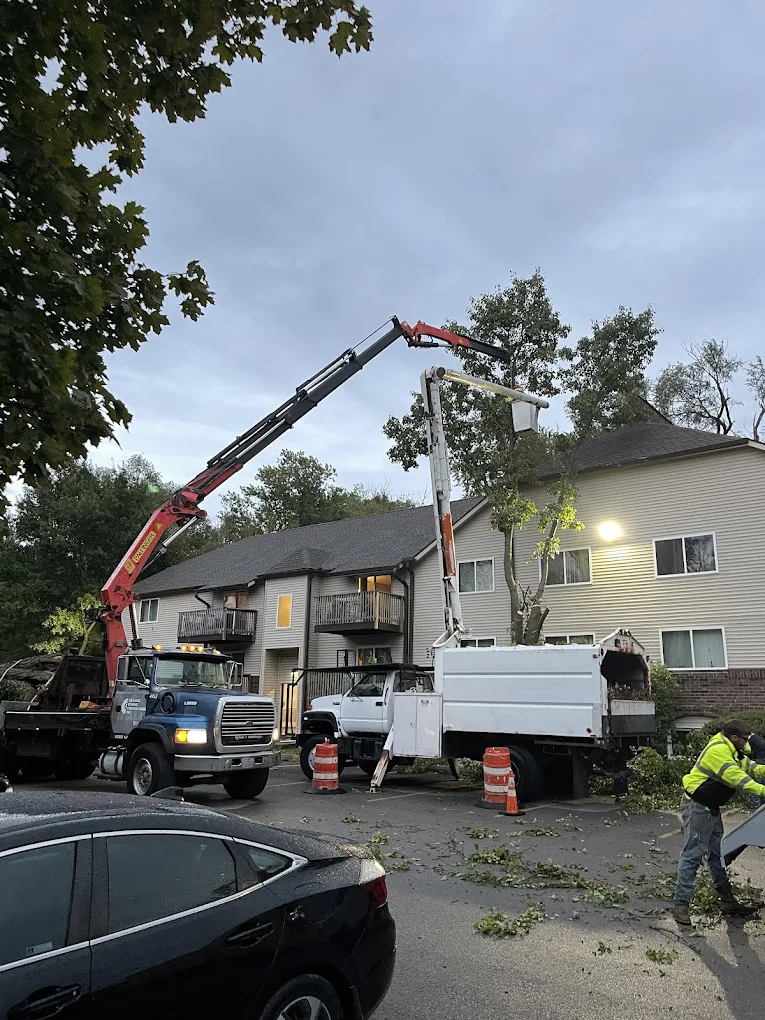
Professional tree trimming in Central Illinois should protect both the tree and the property. Leveled Up Tree & Crane uses equipment and a safety-first approach when working around homes.
When the Whole Tree May Be the Problem
Sometimes the branch is one part of a bigger concern.
A tree may need removal when it has trunk decay, large dead sections, severe storm damage or a weak root system. A growing lean toward the house can also raise concern especially when the soil around the roots has shifted.
Look at the base of the tree after rain. New cracks in the ground lifted soil. Exposed roots may show that the tree is losing stability.
Large trees close to a home deserve attention. Their size leaves room for error if the trunk or a major limb fails.
Leveled Up specializes in hazardous tree removals. That equipment allows the crew to remove sections with more control when a tree stands near a roof or other structure.
What to Do After a Storm
Don’t rush outside. Start cutting damaged branches on your own. Hanging limbs may be under pressure. Their weight can shift as soon as one section is moved.
Start by checking the area from a distance. Keep people and pets away from the tree. If a limb has reached the roof avoid entering the attic or any room below the damaged area until it has been checked.
You should also stay clear of power lines. Even a branch that is not touching a line can move while being cut.
Take photos if it is safe to do. They may help document the damage for your insurance provider.
Leveled Up Tree & Crane provides 24/7 emergency tree service throughout Central Illinois. The team can handle storm-damaged trees, branches on roofs and hazardous situations.
Can You Trim the Branch Yourself?
Small branches that can be reached safely from the ground may be manageable with hand tools. Anything above the roofline is a situation.
Ladders, chainsaws, sloped roofs and heavy limbs are a mix. A cut branch may swing toward the house knock over the ladder or fall in a direction you did not expect.
Branches near utility lines should always be left to trained professionals. The same is true for cracked limbs, storm-damaged trees and large sections hanging above the home.
How Should Trees Near a Roof Be Checked?
There is no schedule that fits every tree. Growing species may need attention more often than slower-growing trees.
A good habit is to look over trees near the home at once or twice a year. Check again after wind, ice or severe thunderstorms.
Pay attention when leaves return in spring. Bare sections are easier to spot when the rest of the canopy is full. Fall is another time because you can see branch structure more clearly after the leaves drop.
You do not need to diagnose every issue yourself. A professional inspection can help you understand what needs trimming now and what can wait.
Do Not Wait for the Branch to Reach the Roof
A tree hanging over your roof can often be handled before it becomes an emergency. The key is noticing changes early. Giving the branches enough space to move safely.
Leveled Up Tree & Crane provides tree trimming, hazardous tree removal, crane services and 24/7 emergency help across Central Illinois.
You are not, in this alone. Reach out for a FREE estimate and find out whether your tree needs trimming, removal or simply a closer look.