
Late winter leaves marks on trees in Central Illinois. Ice loads, wind, and frozen ground can crack limbs and stress roots. Preparing trees for spring helps you spot trouble early and fix it before March storms arrive.
Spring tree maintenance also protects your home. It cuts the risk of falling limbs, roof hits, and blocked driveways. It also keeps shade trees growing strong. Leveled Up Tree & Crane sees the same pattern each year. Small problems in now often turn into emergency calls later.
Start With a Late Winter Tree Check
A quick walk around the yard gives you clear clues. You do not need tools for the first pass. You need time, good light, and a calm look at each tree. This step sets up the rest of your spring tree maintenance and helps you spot risks early.
Look up for hangers and cracked limbs
Stand back and scan the canopy. Watch for limbs that broke but never fell. Those hangers can drop on a warm, windy day. Check big branches for fresh splits and peeling bark. A split that runs lengthwise often grows worse once sap rises.
Ask yourself one question: can that limb hit a roof, car, fence, or play area? If the answer is yes, treat it as a priority. Leveled Up Tree & Crane gets calls like this in March after the first strong wind.
Check the trunk for new wounds
Walk around the trunk and look for long cracks. Look for bark that looks pushed out or torn back. Winter sun can warm one side, then a cold night snaps it. That stress can open a seam. Small seams still matter. They invite insects and decay once spring warmth settles in.
Watch the ground at the base
Roots tell the truth about stability. Look for soil that lifted on one side. Look for fresh gaps where the ground pulled away. A leaning tree with heaved soil can fail during spring storms. Mark it for a closer inspection.
Trim for Safety and Strong Spring Growth
Trimming helps a tree put energy into healthy parts. It also cuts down storm damage risk. This part of preparing trees for spring focuses on what to remove and what to leave alone. The goal stays simple: fewer weak limbs, better structure, and safer clearance.
Clear deadwood and broken tips
Dead branches look dull and brittle. Buds fail to swell on them. Bark may flake off in strips. Cut deadwood back to a healthy collar. Keep cuts clean. Ragged tears invite decay.
Do you need to cut every small dead twig you see? No. Focus on what can fall and what changes the tree’s shape. A small twig high in the crown rarely lands with force. A dead limb over a driveway does.
Fix clearance issues around homes and lines
Limbs that rub roofs and gutters cause damage over time. Limbs that hang over service drops add risk during high wind. Keep a safe buffer from structures. Leave line work to trained crews. Power lines change the risk level fast.
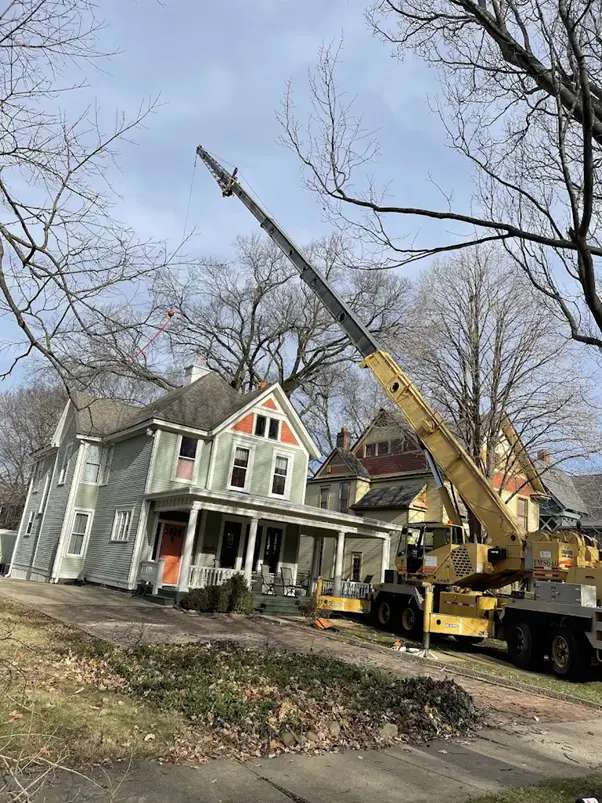
Leveled Up Tree & Crane handles tricky access jobs across Central Illinois. The crew uses the right equipment for tight spots and heavy wood. That reduces risk to your property.
Avoid heavy cuts right before bud break
Big cuts stress a tree. They also trigger fast, weak sprout growth. Save heavy canopy reduction for a proper plan. Focus on safety cuts, deadwood, and clearance. That keeps spring tree maintenance effective without overworking the tree.
Protect Roots and Soil Before Spring Rains
Roots drive health, growth, and stability. Late winter compacts soil and shifts drainage. Early spring rains can flood low areas and wash out mulch. This section of preparing trees for spring keeps your trees stable and reduces long-term decline.
Reset mulch the right way
Mulch keeps roots cooler in summer and steadier during spring swings. But piling it high around the trunk causes trouble. Moisture sits there. Bark weakens.
Aim for a mulch depth near 2 to 4 inches. Spread it out to the drip line when you can. A wider ring beats a deeper pile.
Check drainage and pooling water
Snowmelt shows where water wants to sit. Watch after a rain. If water pools near a trunk for hours, roots struggle for air. That stress shows up later as thin leaves and dieback. Fix simple grading issues early. Move downspouts away from root zones. Add a shallow swale in problem spots.
Reduce soil compaction around key trees
Compacted soil blocks air and water flow. Keep heavy foot traffic off wet ground near trees. Keep vehicles away from roots, even on frozen days. A frozen surface still transmits pressure to the soil below.
Use a simple rule: protect the area under the canopy. That area holds many feeder roots. Healthy feeder roots support spring growth.
Know When a Tree Needs Removal, Not More Trimming
Some trees recover well after winter. Some do not. A weak tree can look fine in February, then fail in April storms. This section helps you judge risk and act before damage happens. It also connects spring tree maintenance with safer long-term choices.
Spot signs of a hazardous tree
Look for large dead sections in the crown. Look for fungus at the base. Look for deep trunk cavities. Look for a lean that keeps increasing. One sign may not mean failure. Several signs together raise concern.
What should you do if you see a new lean after a storm? Treat it as urgent and get it checked. A leaning tree can fall without warning once soil softens.
Leveled Up Tree & Crane takes on hazardous removals other crews refuse. The team brings crane services and grapple saw capability for complex jobs. That matters when a tree sits over a home or tight driveway.
Plan removals before spring storm season ramps up
A planned removal keeps stress low. It also gives you more scheduling options. Emergency calls spike during the first big thunderstorm stretch. A planned job often costs less than a storm response job. It also reduces property risk.
Use an on-site assessment for clear decisions
A proper assessment looks at the canopy, trunk, and roots. It also looks at targets like roofs, fences, and power drops. A trained crew can explain options in plain terms. You get a plan that fits your yard and budget. You also get a safer outcome.
Get Your Trees Ready for Spring
Preparing trees for spring gets easier with a clear plan. Start with a walk-around check, then handle the obvious risks. Schedule trimming that targets deadwood and clearance. Keep roots protected with good mulch and drainage.
If you want a second set of eyes, Leveled Up Tree & Crane can help. The crew serves Central Illinois with tree trimming, removals, crane work, and emergency response. You get a FREE estimate and a straightforward plan. You also get a team that will not turn you away when the job looks tough.