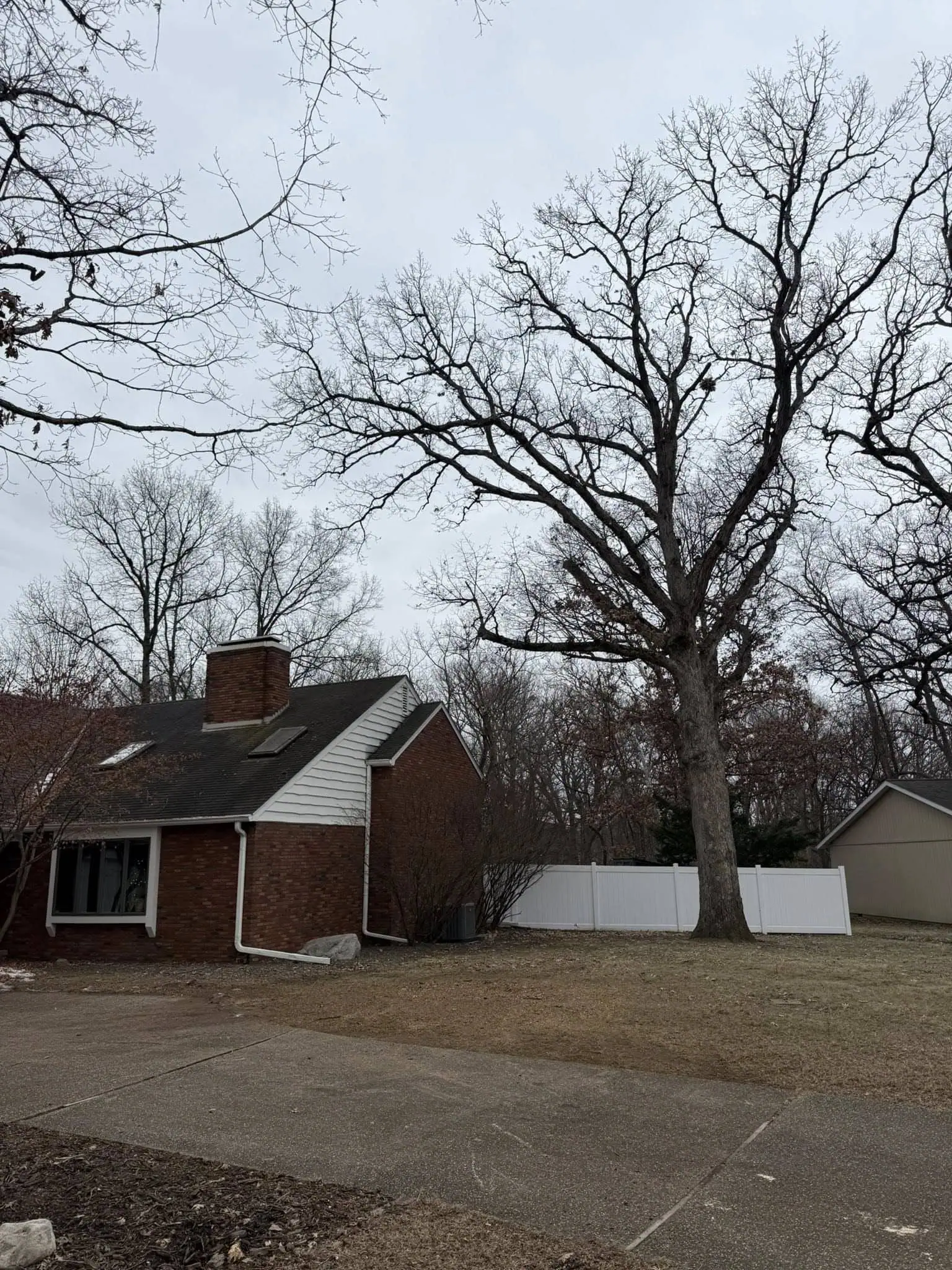
Tree roots near foundation can be a hidden risk for homeowners. When a tree is planted too close to a house, the roots search for moisture and space, and that search can interact with soil and foundation materials in ways that lead to cracking, settling, or leaks.
Many property owners only notice a problem after visible cracks appear or after a basement takes on water, and by then repair costs can grow. Uncertainty about whether a tree is the cause makes it hard to decide whether to prune, remove, or monitor a tree safely.
This guide explains how roots behave, what kinds of trees and soils raise the risk, and how targeted maintenance and modern removal techniques reduce damage potential. It provides clear, practical steps for homeowners in Chillicothe, IL and nearby Central Illinois communities to evaluate risk and choose an appropriate response.
How Tree Roots Can Affect Your Foundation
Tree roots near a foundation can cause damage, but not every nearby tree will harm a structure. Roots themselves do not seek to crack concrete. They grow where conditions are favorable and can exploit existing weaknesses in foundations, sidewalks, and utility lines.
Roots change the moisture balance in surrounding soil, which can cause some soils to shrink or heave and shift a foundation over time. Older foundations or those with pre-existing cracks are more vulnerable because roots and soil movement can widen small openings into larger problems.
How Roots Can Worsen Existing Foundation Problems
Roots can cause problems by altering soil moisture, applying pressure, or invading weak spots in structures. In clay-rich soils, roots that draw moisture away can lead to soil shrinkage and differential settlement, which places uneven loads on a foundation.
Smaller lateral roots can grow into voids or along pipes, while larger structural roots can build up against footings and walls, creating mechanical pressure. Regular health and form assessments of trees, along with timely pruning, reduce the chance that root systems will become a structural problem. For example, homeowners can benefit from professional tree care such as the company’s professional tree trimming and pruning services to manage canopy size and reduce water demand on roots.
Trees and Planting Conditions That Increase Foundation Risk
Certain species and planting situations increase the likelihood that tree roots will affect a foundation. Fast-growing trees with aggressive, shallow root systems are typically more likely to reach foundations than slow-growing species with deep taproots.
Planting large trees within a few meters of a house, or placing multiple trees on the same side of a foundation, concentrates root activity and increases moisture variation in the soil. Soil type also matters. Sandy soils drain quickly while clay soils hold moisture, and both conditions change how roots interact with foundations. Proper species selection and planting distance are key preventative measures.
When Tree Removal May Be Necessary
Removal is necessary when roots pose an immediate structural threat, when a tree is diseased and likely to fail, or when repeated interventions do not resolve ongoing damage. If roots are actively undermining footings or continuing to enter foundation cracks, removal may be the most reliable long-term solution.
Emergency scenarios such as storm-damaged trees that shift toward a house require rapid action to protect occupants and property, and this is why emergency planning and fast response matter. Leveled Up Tree & Crane offers a 24/7 emergency tree removal response that is designed to prevent immediate hazards while minimizing further damage to structures and landscapes.
Protecting Your Foundation During Tree Removal
Modern crane technology and careful removal methods can significantly reduce collateral damage to foundations and surrounding property. Cranes and robotic saws allow crews to remove large stems and heavy sections without pulling on roots or dragging trees across lawns and foundations.
Assessing a tree’s form and making proper pruning cuts when necessary can create a canopy that is well balanced, encourages a single leader, and reduces wind resistance during storms. In difficult sites where space is limited or near sensitive structures, specialized options such as harnessed removal or the advanced crane rental and storm damage cleanup services can preserve foundation integrity while removing the risk.
Signs Tree Roots May Be Affecting Your Foundation
Certain visible signs suggest roots may be affecting a foundation and should prompt further investigation. Horizontal or diagonal cracks in basement walls, doors or windows that stick, and newly sloping interior floors are common indicators of foundation movement.
Exterior clues include cracked or heaving walkways, separation between the house and steps, or soil depressions near the foundation that may indicate root decay or voids. A qualified assessment that considers the tree species, root plate, and soil conditions will help distinguish root-related damage from other structural causes.
Managing Tree Root Problems Without Removing the Tree
Many situations can be managed through targeted interventions before removal is necessary. Root pruning, soil moisture management, and trimming the crown to reduce water demand can slow or halt further root encroachment in some cases.
Always pair any cutting of major roots with professional advice, because improper root pruning can destabilize a tree and create a safety hazard. For homeowners who prefer to keep a tree, working with experienced arborists to follow a long-term care plan reduces risk and protects both the tree and the foundation.
What to Do if You Suspect Tree Root Damage
A practical plan starts by writing down what you can see, when the issue began, and what conditions seem to make it better or worse. That record gives you a clearer way to compare options and ask focused questions about tree roots near foundation instead of relying on a vague first impression.
Next, separate urgent safety or property concerns from improvements that can be scheduled. A careful order of operations can prevent small concerns from becoming larger repairs, and it helps you focus on the factors that matter most.
It also helps to document measurements, photos, maintenance history, or recent changes that relate to the problem. Clear records make it easier to evaluate recommendations, confirm what work is needed, and understand what follow-up will keep the result working as expected.
Finally, review the maintenance steps before you commit to a solution. A good choice should fit your space, budget, and long-term routine, because consistent upkeep is often what protects the value of the initial work.
Related Resources for Tree and Foundation Concerns
For more detail, review Leveled Up Tree & Crane’s professional tree trimming and pruning services page and its 24/7 emergency tree removal response resource before making a final plan. These pages provide additional context about the services and decisions discussed above, while keeping the focus on what applies to your property and priorities.
You can also explore advanced crane rental and storm damage cleanup services when that aspect of the project affects your situation. For independent background, Assessing a tree’s form and making proper pruning cuts when necessary can create a canopy that is well balanced, encourages a single leader, and reduces wind resistance during storms. offers high-authority educational guidance that supports a careful, informed decision.
Frequently Asked Questions
1. Will Every Tree Near My House Damage the Foundation?
No. Not every tree near a house will damage the foundation, but proximity, species, and soil type matter. Leveled Up Tree & Crane in Chillicothe, IL recommends an inspection to determine the actual risk and to advise on appropriate maintenance or mitigation.
2. How Can I Tell if Tree Roots Are Causing Foundation Cracks?
Look for patterns of movement like localized settling near a tree, cracks that widen over time, or plumbing problems near the affected area. Leveled Up Tree & Crane in Chillicothe, IL can evaluate whether root activity aligns with observed damage and advise on next steps.
3. Can Root Pruning Help Without Removing the Tree?
In some cases, careful root pruning and crown reduction can reduce stress on the foundation while keeping the tree. Leveled Up Tree & Crane in Chillicothe, IL emphasizes that root work should be performed by professionals to avoid destabilizing the tree or causing additional harm.
4. What Should I Do if a Tree Falls Toward My House?
If a tree falls or is leaning after a storm, prioritize safety and avoid the area until professionals assess it. Leveled Up Tree & Crane in Chillicothe, IL provides emergency response and can safely remove hazardous trees, helping to protect your home and property.
Conclusion
Tree roots near a foundation do not automatically mean your home will suffer damage. Problems are more likely when large roots interact with existing weaknesses, soil moisture changes cause movement, or trees are planted too close to the structure. Foundation cracks, sticking doors, uneven floors, and heaving walkways are signs worth investigating rather than assuming the tree is the cause.
Leveled Up Tree & Crane Is Ready to Help in Chillicothe, IL
Leveled Up Tree & Crane can assess tree-related foundation concerns and recommend safe, code-compliant solutions for homeowners in Chillicothe, IL. Use the company website or the contact form to request a detailed assessment, ask about inspection options, or schedule follow-up care. Experienced crews, modern equipment, and local knowledge help protect both structures and landscapes.