
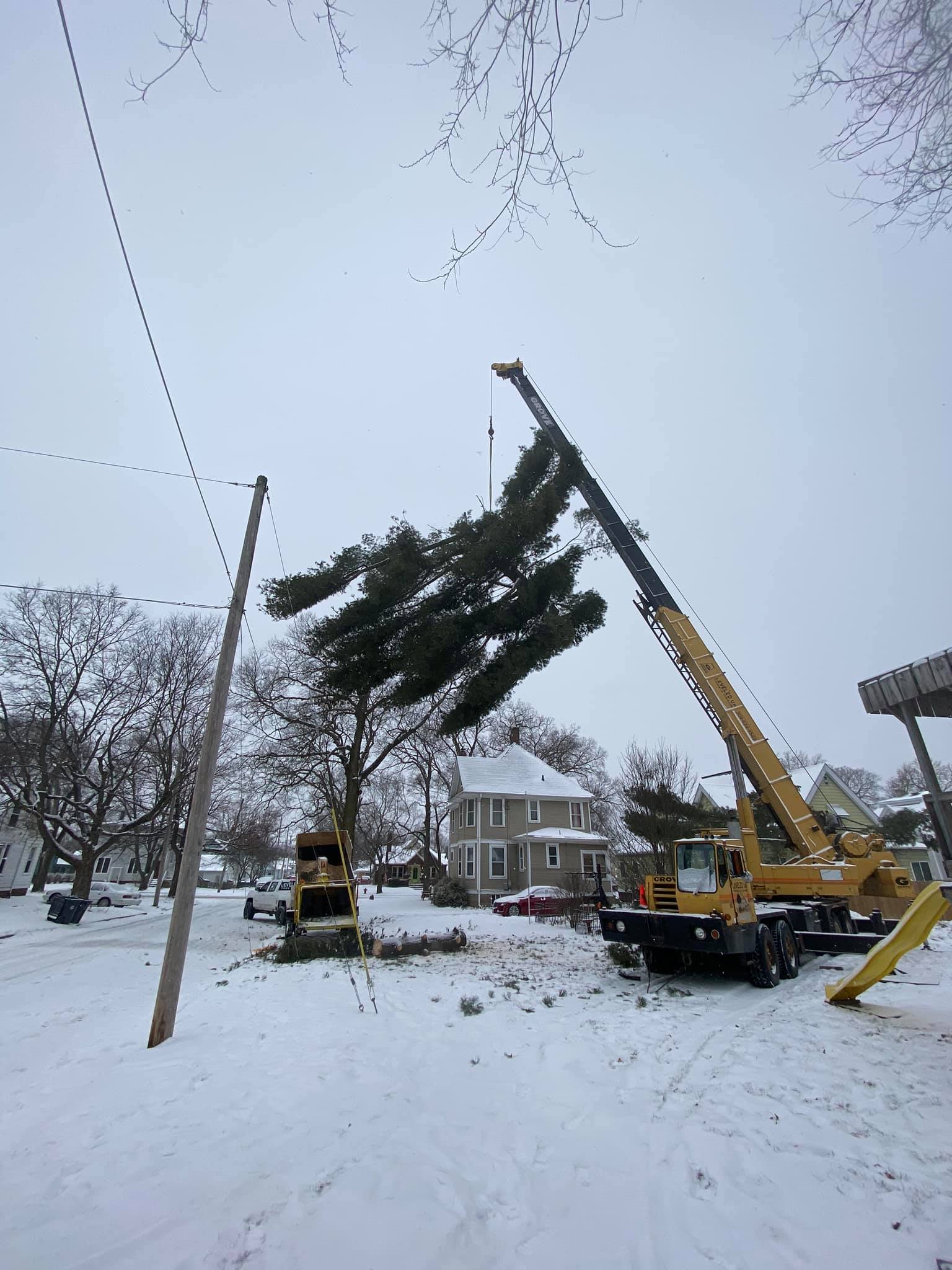
So your big oak came down during the ice storm.
Not just down. Down in the worst possible spot. Wedged between your house and your neighbor’s fence. Leaning against power lines. Resting on your garage roof. Or maybe it fell across three properties and now you’re dealing with insurance companies, utility workers, and angry neighbors all at once.
Regular tree removal equipment can’t touch this mess. You need a crane. And you need someone who knows what they’re doing with it.
That’s where most homeowners get stuck. They call regular tree services. Those companies take one look and say “we can’t do that” or “that’s gonna be expensive” or worst of all, “we’ll give it a shot” when they clearly shouldn’t.
Crane-assisted tree removal isn’t something you improvise. It’s specialized work requiring specific equipment, training, and experience. Let me explain when you actually need a crane, why it matters, and what to expect when you’re dealing with ice storm damage across Illinois.
What Makes Ice Storm Tree Damage Different
Ice storms wreck trees in ways regular storms don’t. Wind knocks trees over. Ice breaks them apart.
You get accumulation. Half inch, inch, sometimes two inches of ice coating every branch. That weight adds up fast. A large tree can be carrying thousands of extra pounds. Branches snap. Trunks split. Entire trees uproot or break at weird angles.
And here’s the nasty part. The damage isn’t clean. Wind-blown trees fall mostly in one direction. Ice-damaged trees fail in unpredictable ways. You get partial failures. Hung-up situations. Trees leaning at angles that make no sense. Multiple failures on one tree.
Common ice storm damage patterns:
Trees split down the middle. Ice load pulls branches apart. You end up with a tree that’s essentially two halves barely connected.
Crown failures. Top of the tree breaks off. It’s sitting in the canopy of another tree. Or resting on power lines. Or wedged in a position where gravity’s waiting for the right moment to drop it.
Multiple limb failures. Not one branch. Ten branches. All hanging at different angles. All threatening to fall.
Uprooted trees with compromised root balls. The tree fell but didn’t fully come down. It’s leaning at 45 degrees held up by neighboring trees.
Trees on structures. Fell on houses, garages, sheds, cars. Can’t just cut and drop. Gotta lift and move.
When You Actually Need Crane-Assisted Removal
Not every difficult tree needs a crane. But some absolutely do.
You need a crane when the tree’s position, size, or condition makes traditional removal impossible or too risky. Here’s when crane work becomes necessary, not optional.
Tree’s on a structure. It fell on your house. Your garage. Your neighbor’s shed. You can’t cut it up and drop pieces. They’re already on the building. You need to lift sections off without causing more damage.
Tree’s hung up in power lines. Utility company secured the lines. They cut power. But the tree’s still tangled in wires. Can’t safely work on it from the ground or with climbers. Need to lift it clear.
No safe drop zone exists. The tree’s surrounded by structures, vehicles, landscaping, fences, pools. Nowhere to safely drop large pieces. Crane lifts them up and over obstacles to a safe landing zone.
Tree’s too large for safe sectional removal. Massive oak. Huge cottonwood. Too big to climb safely. Too big to section down piece by piece without serious risk. Crane removes large sections at once.
Tree’s structurally compromised. Ice damage weakened it. Cracks in the trunk. Splits in major limbs. Can’t trust it to hold a climber’s weight. Crane does the work from outside.
Tree’s leaning toward high-value targets. Leaning toward house. Toward neighbor’s property. Toward power lines. Can’t risk it falling wrong direction. Crane controls the entire removal.
Multiple trees down creating tangled mess. Three trees fell together. They’re intertwined. Can’t safely work on one without affecting others. Need crane to systematically dismantle the pile.
Access issues prevent traditional equipment. Backyard tree. No way to get bucket truck back there. Can’t climb safely. Crane reaches over house from street.
How Crane-Assisted Tree Removal Actually Works
Crane tree removal looks simple from the outside. It’s not.
You’re coordinating heavy equipment, rigging, cutting, and ground crew all at once. Everyone needs to know exactly what they’re doing. One mistake and you’ve got crane load swinging into something expensive or someone getting hurt.
The process:
Site assessment comes first. We walk the property before bringing equipment. Identify crane position. Identify tree attachment points. Plan removal sequence. Check for obstacles. Verify ground conditions can support crane weight.
Crane setup and stabilization. Position crane for optimal reach and stability. Extend outriggers. Level the crane. Verify stable footing. Set up work zones and safety perimeter.
Rigging preparation. Attach rigging straps or cables to tree section being removed. Position rigging above center of gravity. Verify attachment security. Check load capacity.
Cut and lift sequence. Climber or bucket truck operator makes strategic cut. Crane lifts section as cut completes. Crane operator swings load to designated landing zone. Ground crew receives and processes wood.
Systematic removal. Repeat process working from top to bottom or outside to inside depending on tree structure and damage pattern. Remove sections in order that maintains stability.
Stump and cleanup. Once tree’s removed, grind stump if requested. Haul debris. Clean site.
Sounds straightforward. It is if everyone knows their job. It’s chaos if they don’t.
Equipment and Certification Requirements
Not all cranes are the same. Not all operators are qualified.
Crane specifications matter:
Reach capacity. How far can the crane extend while maintaining safe load limits? Longer reach means positioning flexibility but reduced lifting capacity.
Lifting capacity. How much weight can the crane safely lift at various extensions? Larger trees need higher capacity cranes.
Terrain capability. Can the crane access the site and set up on available ground conditions? Some cranes need solid concrete. Others handle softer ground.
Operator certification requirements:
NCCCO certification (National Commission for the Certification of Crane Operators). This isn’t optional. It’s required for legal crane operation.
Insurance and bonding. Crane work carries serious liability. Proper insurance protects property owners and workers.
Rigging expertise. Knowing how to safely attach loads. Understanding load dynamics. Preventing swing and drop accidents.
Tree knowledge. Understanding tree structure. Knowing where to cut. Predicting how damaged trees behave under load.
At Leveled Up Tree & Crane in Chillicothe, IL, we’ve got all this covered. NCCCO certified operators. Proper equipment for Illinois conditions. Experience with ice storm damage patterns. Full licensing and insurance.
Cost Factors for Crane Tree Removal
Crane work costs more than regular tree removal. No way around that. But when you need it, you need it.
What drives crane removal costs:
Crane rental and operation. Cranes aren’t cheap to rent or operate. Fuel costs. Transportation costs. Operator costs. Setup and breakdown time all factor in.
Crew size requirements. Crane jobs need larger crews. Operator, climber or bucket truck operator, ground crew, rigging specialist. More people means higher labor costs.
Job complexity and risk. Simple lift and removal costs less than complicated rigging situations with multiple obstacles and tight clearances.
Tree size and weight. Bigger trees need bigger cranes. Bigger cranes cost more. Heavier loads require more careful rigging.
Site access challenges. Difficult access means more setup time. More planning. Sometimes multiple crane positions. All adds to cost.
Debris disposal. Large trees generate lots of wood and debris. Hauling and disposal costs scale with volume.
Emergency timing. Need crane work immediately after storm? Emergency rates apply. Scheduling flexibility reduces costs.
You’re looking at $1,500 to $5,000 for most residential crane tree removals in Illinois. Could be more for extremely large or complicated situations. Could be less for straightforward lifts on smaller trees.
Get written estimates. Make sure they include all costs. Crane rental, crew, hauling, disposal. No surprises halfway through the job.
Safety Considerations and Risks
Crane tree removal done wrong kills people. Damages property. Creates legal nightmares.
Primary risks:
Load swing and drop. Crane load swings uncontrolled. Hits structure, vehicle, or person. Load releases unexpectedly and falls.
Crane stability failure. Improper setup. Unstable ground. Crane tips or shifts during lift.
Rigging failure. Strap breaks. Cable snaps. Attachment point fails. Load falls.
Power line contact. Crane boom contacts power lines. Electrocution risk. Fire risk.
Struck-by hazards. Ground crew in wrong position. Gets hit by swinging load or falling debris.
Communication breakdown. Crew not coordinating properly. Signals missed or misunderstood. Actions out of sequence.
This is why you don’t hire Joe with a crane from Craigslist. This is specialized work requiring training, experience, and proper safety protocols. Cutting corners on crane tree removal is gambling with lives and property.
Illinois-Specific Ice Storm Challenges
Illinois ice storms bring their own set of problems.
Weather patterns. We get freeze-thaw cycles. Ice accumulates. Temperatures rise slightly. More precipitation adds more ice. Gets heavy fast.
Tree species common here. Oaks, maples, ash, cottonwoods. These species react differently to ice load. Some split. Some uproot. Some just shed branches.
Soil conditions. Clay-heavy soils in parts of Illinois. When saturated, they lose stability. Trees uproot easier. Crane setup gets trickier.
Power line configurations. Rural areas with overhead lines. Trees and lines in close proximity. Ice storms knock trees into lines regularly.
Property layouts. Mix of rural properties with room to work and subdivisions with tight lots. Access varies dramatically.
Seasonal timing. Ice storms hit winter through early spring. Working in cold. Dealing with frozen ground. Shorter daylight hours.
We’ve worked Illinois ice storm damage for years at Leveled Up Tree & Crane. We know the patterns. We know the challenges. We know how to safely handle complicated situations.
What to Do Immediately After Ice Storm Tree Damage
Ice storm just passed. You’ve got tree damage. What’s next?
Immediate steps:
Safety first. Stay away from downed trees. Stay away from anything touching power lines. Keep family and pets clear.
Call utility company if power lines involved. Don’t touch. Don’t approach. Let them secure lines before anyone works near them.
Document damage for insurance. Photos from multiple angles. Video. Write down when damage occurred. Note weather conditions.
Call professional tree service with crane capability. Explain situation. Send photos if possible. Get estimate for emergency work.
Secure property if possible without risk. Tarp holes in roof. Move vehicles away from unstable trees. Block off danger zones.
Don’t attempt DIY on crane-worthy situations. If the tree’s position or size suggests you need a crane, you need a crane. Don’t try makeshift solutions.
Check with neighbors if trees affected multiple properties. Coordinate. Share information. Figure out who’s responsible for what.
Choosing the Right Crane Tree Service
Not all tree companies offer crane services. Among those that do, capabilities vary.
What to verify:
Crane ownership or reliable rental relationships. Do they own equipment or rent it? If renting, do they have established relationships with rental companies for quick access?
Operator certification. NCCCO certified? Other relevant credentials? How many years experience?
Insurance coverage. General liability. Workers comp. Crane operation insurance. Get proof.
Local experience. Have they worked your area? Do they know local conditions, regulations, utilities?
Equipment appropriate for your job. Do they have crane with adequate reach and capacity for your specific situation?
References and reviews. What do previous customers say about their crane work? Any complaints or issues?
Clear communication and estimates. Do they explain the plan? Do they provide detailed written estimates? Are they responsive?
At Leveled Up Tree & Crane in Chillicothe, IL, we handle the full range of crane-assisted tree removal situations. From straightforward lifts to complicated multi-tree ice storm damage. We’ve got equipment, training, and experience.
Call us for emergency ice storm tree removal or schedule crane-assisted removal service.
Key Takeaways
- Ice storms create tree damage requiring specialized crane-assisted removal
- Crane work necessary when trees on structures, in power lines, or too large/compromised for traditional removal
- Proper crane tree removal requires certified operators, appropriate equipment, and experienced crews
- Costs range $1,500 to $5,000+ for residential crane tree removal depending on complexity
- Safety risks are serious, making professional service critical
- Illinois ice storms bring specific challenges requiring local experience
- Choose crane tree services based on certification, insurance, equipment, and proven experience
FAQs: Crane-Assisted Tree Removal
Q1: How much does crane-assisted tree removal cost in Illinois?
Costs typically range $1,500 to $5,000 for residential jobs, depending on tree size, job complexity, site access, and debris disposal requirements. Large or complicated removals cost more. Get written estimates including all costs before work begins.
Q2: How long does crane tree removal take?
Simple crane lifts take 2 to 4 hours. Complex jobs with multiple trees or difficult rigging take a full day or more. Setup and breakdown time add to actual removal time. Weather conditions and site access affect timeline.
Q3: Can any tree service company provide crane-assisted removal?
No. Crane work requires specialized equipment, certified operators, proper insurance, and specific training. Many tree services don’t offer crane services. Those that do need verification of credentials and capabilities.
Q4: Is crane tree removal safe?
When done by qualified professionals with proper equipment and safety protocols, yes. When attempted by unqualified operators or with inadequate equipment, it’s extremely dangerous. Verify certification, insurance, and experience before hiring.
Q5: Will crane tree removal damage my property?
Proper crane work protects property. That’s often why cranes are used instead of traditional methods. Crane operators position equipment carefully. They use ground protection under outriggers. They control loads precisely. Property damage from qualified crane services is rare.
Q6: Do I need permits for crane-assisted tree removal?
Depends on location and specifics. Some municipalities require permits for crane operation or tree removal. Tree services familiar with local regulations can advise. Often they handle permit applications.
Q7: Can crane tree removal be done in winter?
Yes. Cranes operate in cold weather. Ice storm damage often requires winter removal. Ground must be stable enough to support crane weight. Frozen ground can actually help stability in some situations.
Q8: What happens if tree falls on power lines?
Call utility company immediately. Don’t approach. Don’t attempt removal. Utility company will secure lines and cut power. Once they give clearance, crane service can safely remove tree. Never work near power lines without utility company involvement.